The Redistricting War

By: Austin Abbring
May 16, 2026
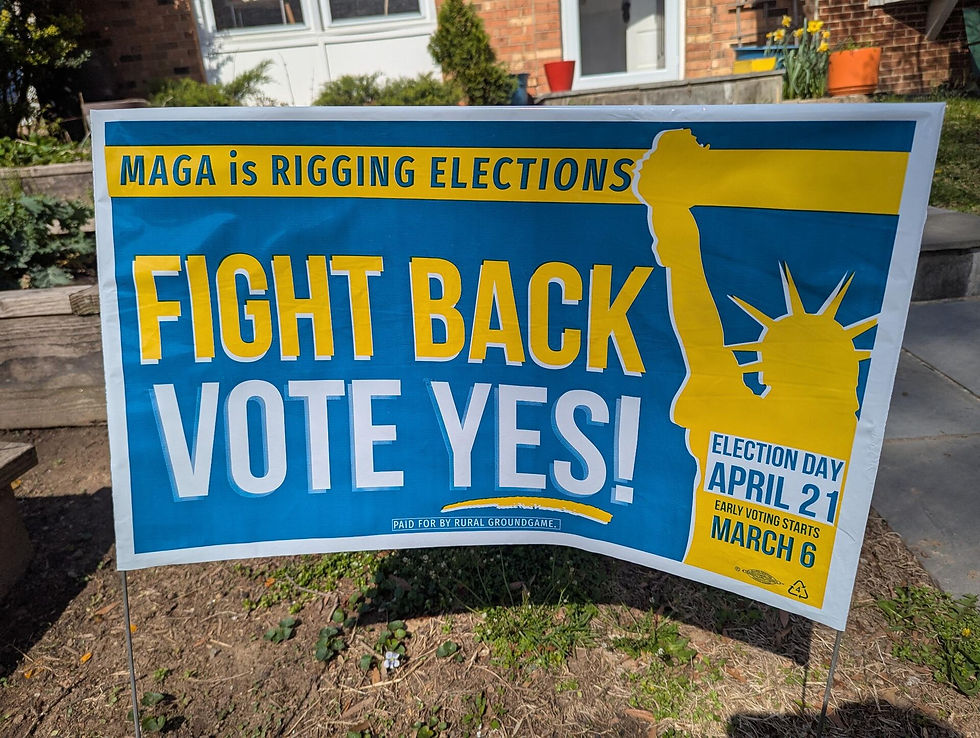
Gerrymandering is not a new phenomenon in the United States. The practice has been around under this name since 1812, but can be traced back to the late 1780’s. In that time, both political parties in this country have enacted odd-shaped districts to maintain power. Historically, Republicans have held the advantage, meaning they have used this practice much more frequently over the last 200 years. In fact, since 2010 alone, Republicans have gained around 20 additional seats.
The most common way gerrymandering occurs is through “cracking” and “packing” (Brennan Center). Cracking is exactly as the name sounds. Disfavored groups of voters who oppose the party attempting to redistrict see their strength divided by, quite literally, breaking up these pockets through new district lines. This removes any “advantage” a party may hold in a given region. On the flipside, packing compresses as many unfavorable voters into as few districts as possible. This eliminates widespread influence from these voters through various regions. It allows one party to maybe lose some ground in, say, the heart of a city but gain ground in the suburbs, thereby gaining more seats.
By all means, I am not in favor of gerrymandering. It allows elected officials to escape accountability at the ballot box. I believe it is a practice that undermines democracy by misrepresenting true electoral outcomes and the will of people disproportionately affected. The Democratic Party introduced the Freedom to Vote Act in 2022 to ban partisan gerrymandering. It passed in the House of Representatives, but finally narrowly died in the Senate. Republican lawmakers have killed both of the last two bills introduced by Democrats. This has led to the dogfight we are currently in with the Trump administration. Gerrymandering is not going away for at least the remainder of this term, despite the vast majority of Americans holding unfavorable views of the practice, regardless of party affiliation.
Two takeaways from the 2025-2026 redistricting battle:
1. Let’s not forget who started this recent fight. Republicans in Texas attempted to draw 5 new seats at Donald Trump's request. A president, mid-census, or at any time in American history has not directly demanded gerrymandering. Any redistricting that Democrats have recently approved is in conjunction with Republicans, who are attempting it more aggressively than ever before.
2. There is a stark difference in how these measures have been carried out. There was a statewide vote in California, with Proposition 50, and now in Virginia. It was left to the voters in these states. The Republican lawmakers in Texas just flat-out redistricted without a vote amongst their constituents.
As we look forward to the midterms and the 2028 elections, we must demand that partisan gerrymandering be abolished.


Comments